Where "Quandong" Comes From
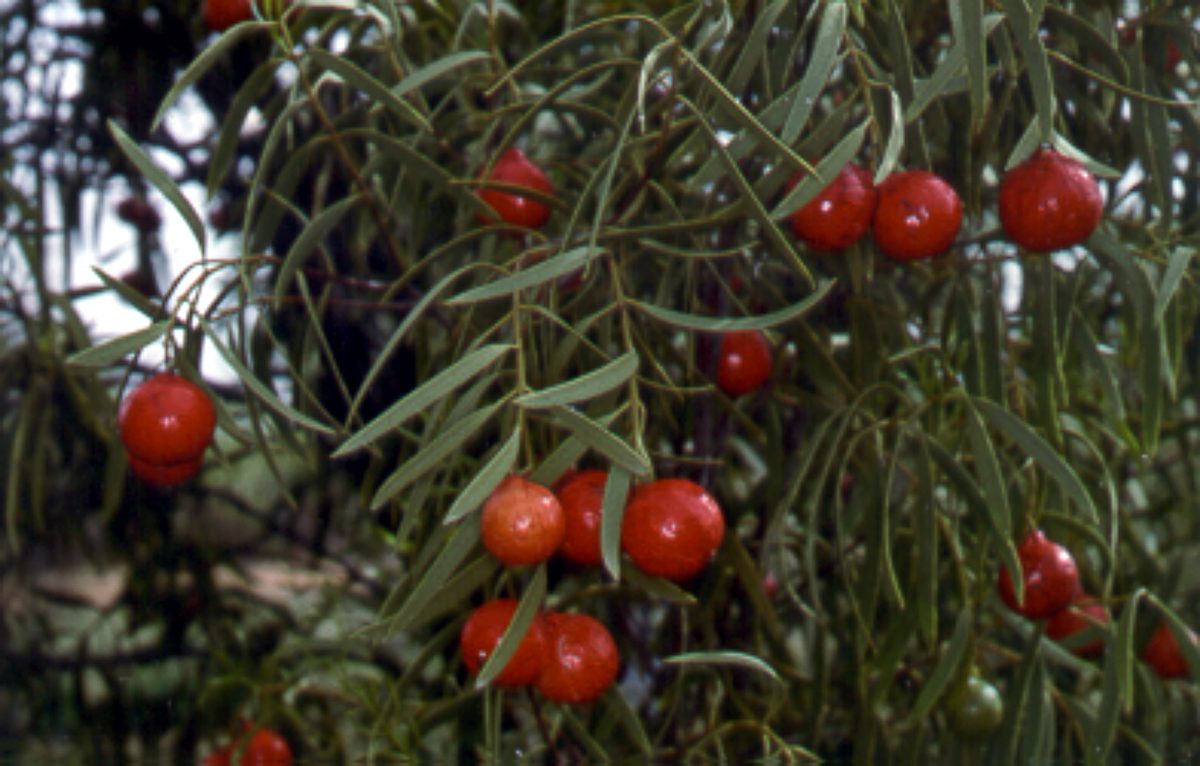
Photo by CSIRO, Wikimedia Commons (CC BY 3.0)
"Quandong" comes from Wiradjuri (an Aboriginal language of central NSW), first recorded in English in the 1830s-40s (Dictionary.com), from Wiradjuri guwandhang.
Quandongs (Santalum acuminatum) are hemi-parasitic trees that attach their roots to the roots of neighbouring host plants. The fleshy red tart fruit is a good source of vitamin C, while the hard, wrinkled stone was made into necklaces and buttons, and later used as Chinese checkers pieces, and the kernel is high in fat.
“We stopped at the outback roadhouse to try a slice of warm quandong pie with fresh cream.”
How Aussies Actually Use It
Celebrated across South Australia, regional Victoria, and the outback as a gourmet native ingredient for jams, chutneys, and desserts.
Quandong pie is considered an iconic regional outback treat.
📚 Sources & Further Reading
- Borrowings from Aboriginal Languages — Australian National Dictionary Centre, ANU
- List of English words of Australian Aboriginal origin — Wikipedia
- Santalum acuminatum - Wikipedia
- quandong - Dictionary.com
Part of our Aboriginal Loanwords collection →
🎓 Want to sound like a true Aussie?
Watch Down Under English on YouTube for real Australian pronunciation, slang lessons, and culture — taught by an Australian educator.
Watch on YouTube →