Where "Taipan" Comes From
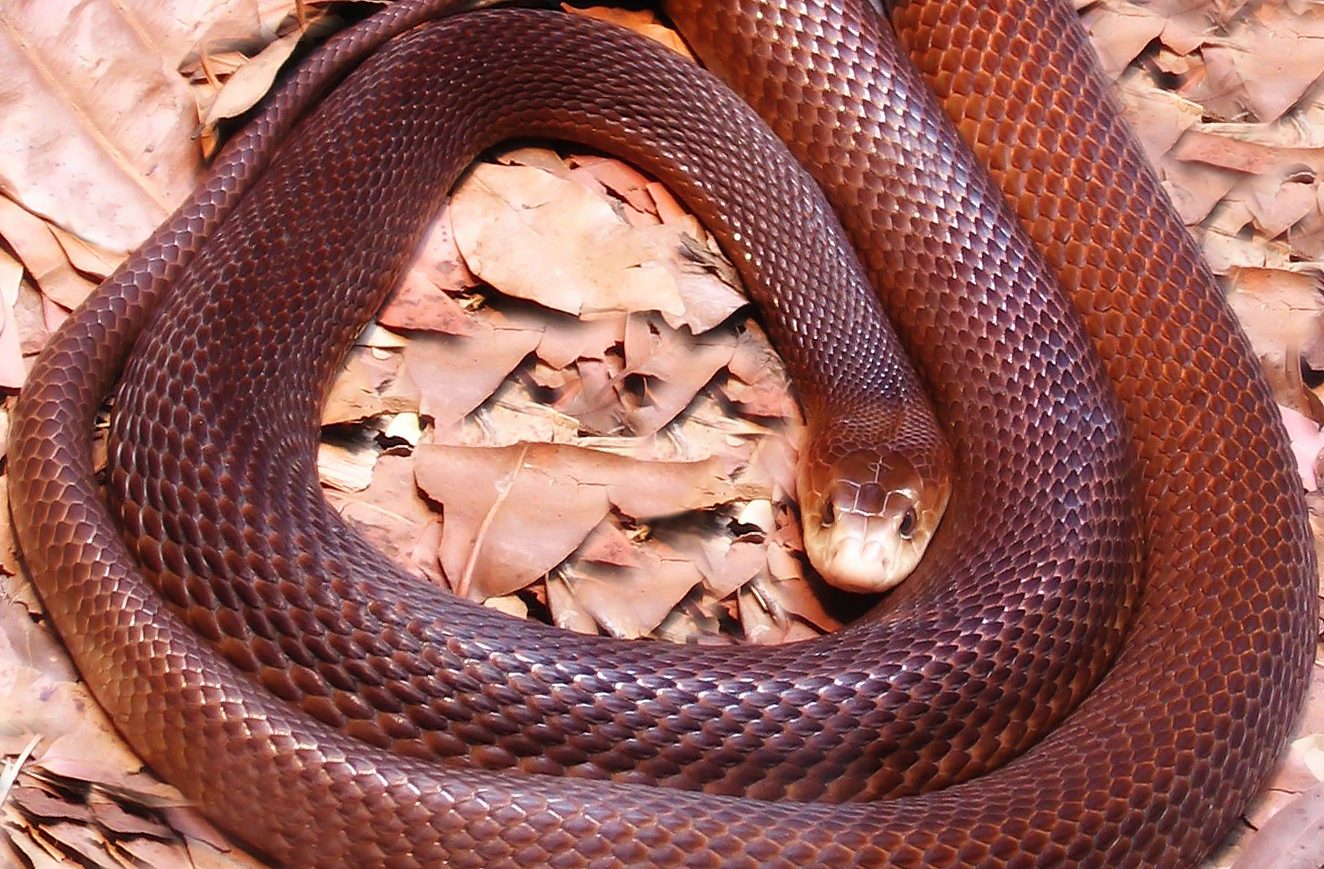
Photo by AllenMcC., Wikimedia Commons (CC BY-SA 3.0)
"Taipan" comes from Wik-Mungkan, an Aboriginal language of western Cape York Peninsula in north Queensland, where dhayban was the traditional name for the feared large serpent and ancestral creator being.
Anthropologist Donald Thomson popularised the name in the 1930s after working with Wik-Mungkan people on Cape York (Dictionary.com first records it 1930-35). The inland taipan is widely regarded as the world's most venomous snake based on laboratory toxicity tests.
“Keep your distance in the spinifex — a coastal taipan can strike with lightning speed.”
How Aussies Actually Use It
Aussies regard the taipan with immense caution and respect — encountering one in the outback or cane fields is taken very seriously.
The inland taipan is generally shy and reclusive, while the coastal taipan is nervous and alert and will defend itself fiercely if surprised or cornered.
📚 Sources & Further Reading
- Borrowings from Aboriginal Languages — Australian National Dictionary Centre, ANU
- List of English words of Australian Aboriginal origin — Wikipedia
- Coastal Taipan - Australian Museum
- Taipan - Wikipedia
- Inland taipan - Wikipedia
- taipan - Dictionary.com
Part of our Aboriginal Loanwords collection →
🎓 Want to sound like a true Aussie?
Watch Down Under English on YouTube for real Australian pronunciation, slang lessons, and culture — taught by an Australian educator.
Watch on YouTube →