Where "Wobbegong" Comes From
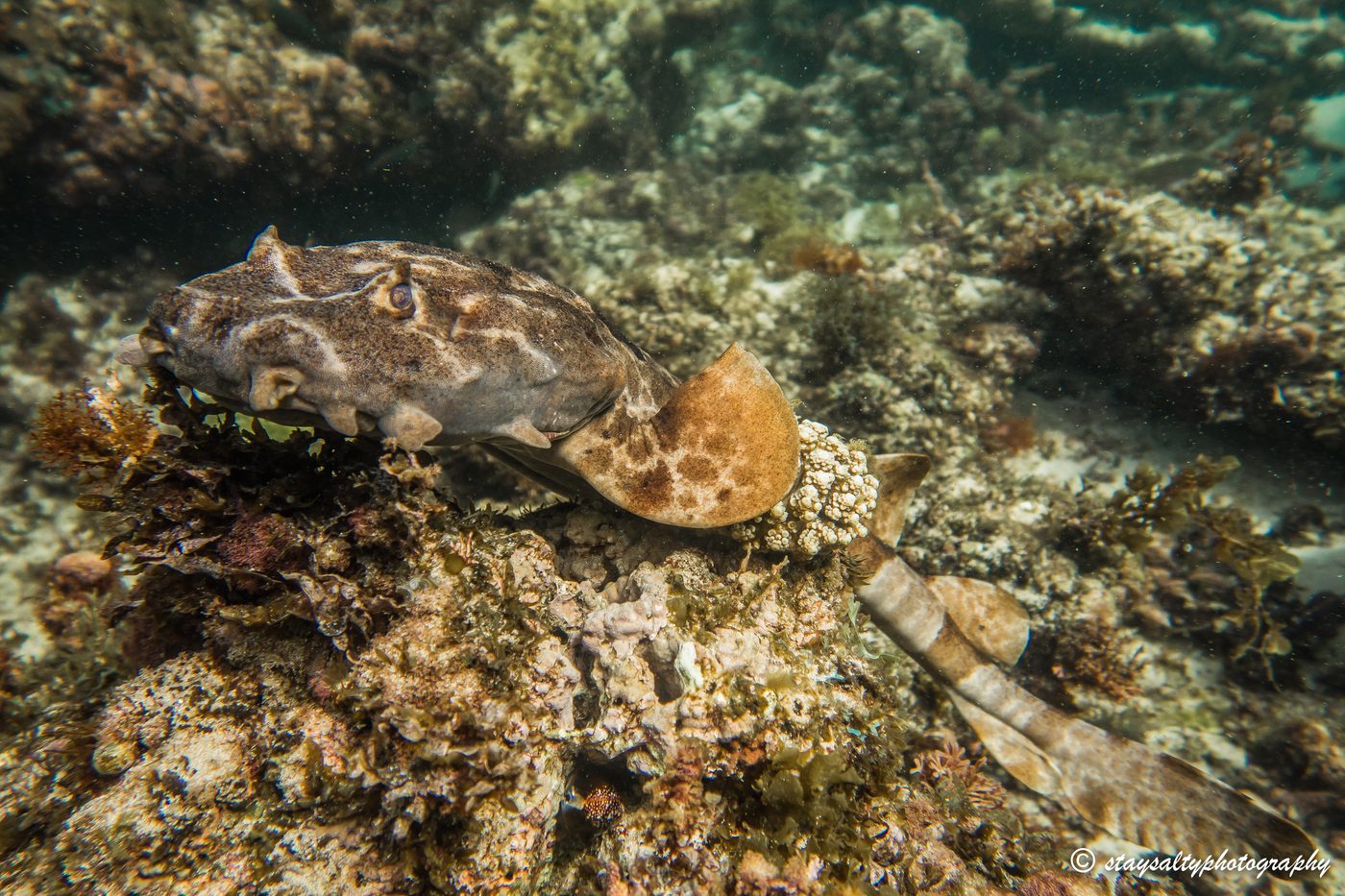
Photo by Mason Sullivan, Wikimedia Commons (CC BY-SA 4.0)
"Wobbegong" comes from Dharug, the language of the Sydney basin First Nations people, often translated as "shaggy beard", referring to the fringe of weed-like skin flaps around its mouth.
Wobbegongs (Orectolobidae) are ambush predators that use their camouflaged markings to blend into reefs and seabeds in shallow temperate and tropical waters, chiefly around Australia and Indonesia.
“While snorkelling over the reef, we noticed a well-camouflaged wobbegong resting peacefully on the sandbar.”
How Aussies Actually Use It
A familiar sight to Australian spearfishers, scuba divers, and reef snorkellers along both the east and west coasts.
Aussies often call them "wobbies" for short — generally not considered dangerous, but they can bite hard if disturbed or grabbed, so give them space.
📚 Sources & Further Reading
- Borrowings from Aboriginal Languages — Australian National Dictionary Centre, ANU
- List of English words of Australian Aboriginal origin — Wikipedia
- Wobbegong - Wikipedia
- wobbegong - Wiktionary
- Gulf Wobbegong - Australian Museum
Part of our Aboriginal Loanwords collection →
Say It Like an Aussie
Say it: WOB-ee-gong.
In conversation:
- We spotted a wobbegong under the ledge.
- A wobbegong blends right into the reef.
- The divers saw a wobbegong near the rocks.
Good to know: Wobbegongs are camouflaged sharks that rest on the sea floor. Admire them from a distance, because they can bite if they’re disturbed.
See also: Noah’s ark, Yabby
🎓 Want to sound like a true Aussie?
Watch Down Under English on YouTube for real Australian pronunciation, slang lessons, and culture.
Watch on YouTube →