Where "Willy-willy" Comes From
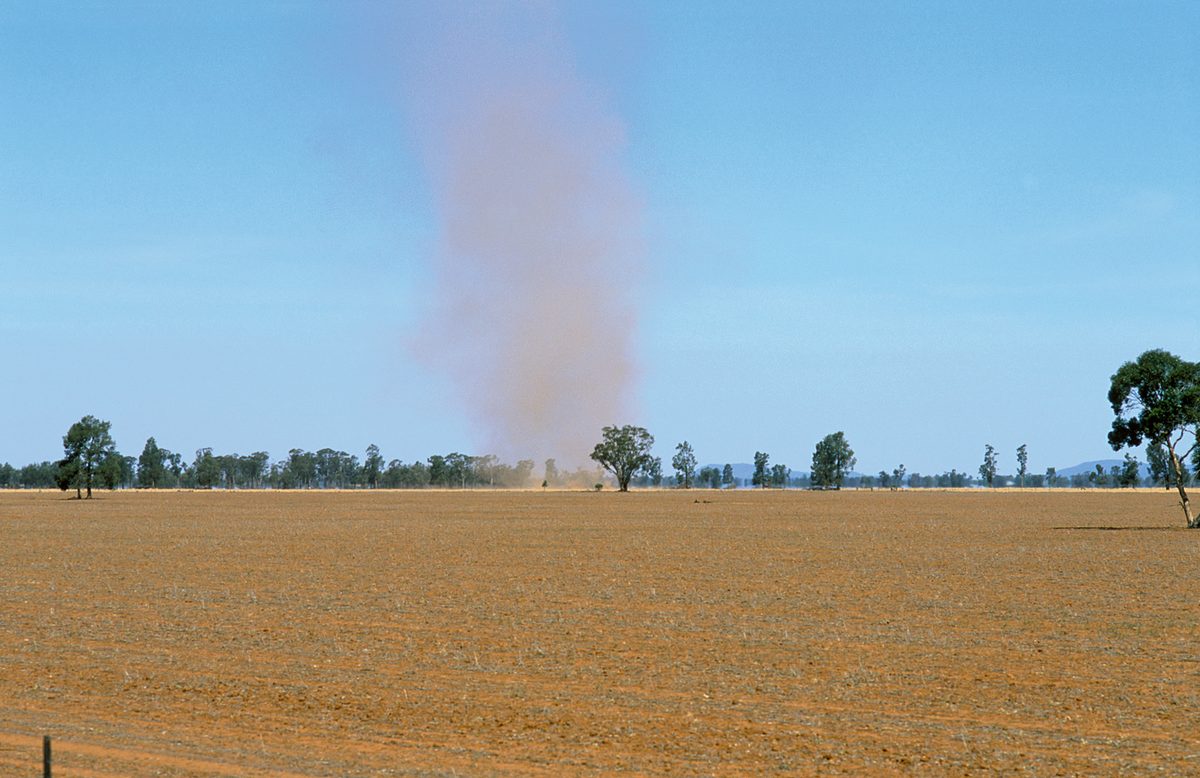
Photo by Gregory Heath / CSIRO, Wikimedia Commons (CC BY 3.0)
According to an ABC News report, the Macquarie and Oxford dictionaries trace “willy-willy” to the Yindjibarndi word wili wili from Western Australia’s Pilbara region. Linguist Travers Eira of the Wangka Maya Pilbara Aboriginal Language Centre notes that the term was likely used across several Pilbara languages, citing an early written record in English from 1894.
Green’s Dictionary of Slang marks it Australian for a violent wind storm and gives no origin of its own, recording examples from 1908 in a goldfields book and 1910 in the Sydney Bulletin through to 2021. In outback writing, the swirling dust storm is often mentioned alongside “cock-eyed Bob”.
“A willy-willy whipped up the red dirt and sent hats flying across the paddock.”
Listen to the Aussie voice, record your voice, then compare back-to-back.
How Aussies Actually Use It
A familiar sight across the Australian red centre and outback roads, spinning unexpectedly across dry paddocks, sports grounds, and stock routes on hot summer afternoons.
Aussies use it affectionately: "Hang onto your hat, there's a willy-willy coming through!"
📚 Sources & Further Reading
- Green's Dictionary of Slang: entry for willy-willy
- Origin of 'willy-willy' links back to Pilbara First Nations - ABC News
- List of English words of Australian Aboriginal origin — Wikipedia
- willy-willy - Dictionary.com
Part of our Aboriginal Loanwords collection →
Say It Like an Aussie
Say it: WIL-ee WIL-ee.
In conversation:
- A willy-willy swept across the paddock.
- Dust from the willy-willy blew into our eyes.
- We watched a willy-willy spin along the road.
Good to know: A willy-willy is a small whirlwind of dust. They’re a normal sight in dry outback country.
🎓 Want to sound like a true Aussie?
Watch Down Under English on YouTube for real Australian pronunciation, slang lessons, and culture.
Watch on YouTube →