Where "Quokka" Comes From
"Quokka" comes from the Noongar language, spoken by Aboriginal peoples of south-western Western Australia. European records of the word date to around 1830, when early settlers in the region encountered the small marsupial on Rottnest Island and the nearby mainland. The Noongar forms "gwaga" or "gawaga" were recorded and eventually settled into the English spelling "quokka." The island's Dutch name — Rottnest, meaning "rat's nest" — came from a 1696 visit by Dutch explorer Willem de Vlamingh, who mistook the quokkas for large rats.
The quokka (Setonix brachyurus) is a small macropod — related to kangaroos and wallabies — found primarily on Rottnest Island and in small numbers on the mainland near Albany. Its facial structure, which gives the impression of a smile, made it the subject of a social media trend from around 2015: the "quokka selfie," in which visitors photographed themselves alongside quokkas on Rottnest Island. The trend turned a relatively obscure marsupial into one of Australia's most internationally recognised animals.
Source: Wikipedia — "Quokka"
"We took about fifty quokka selfies on the island."
How Aussies Actually Use It
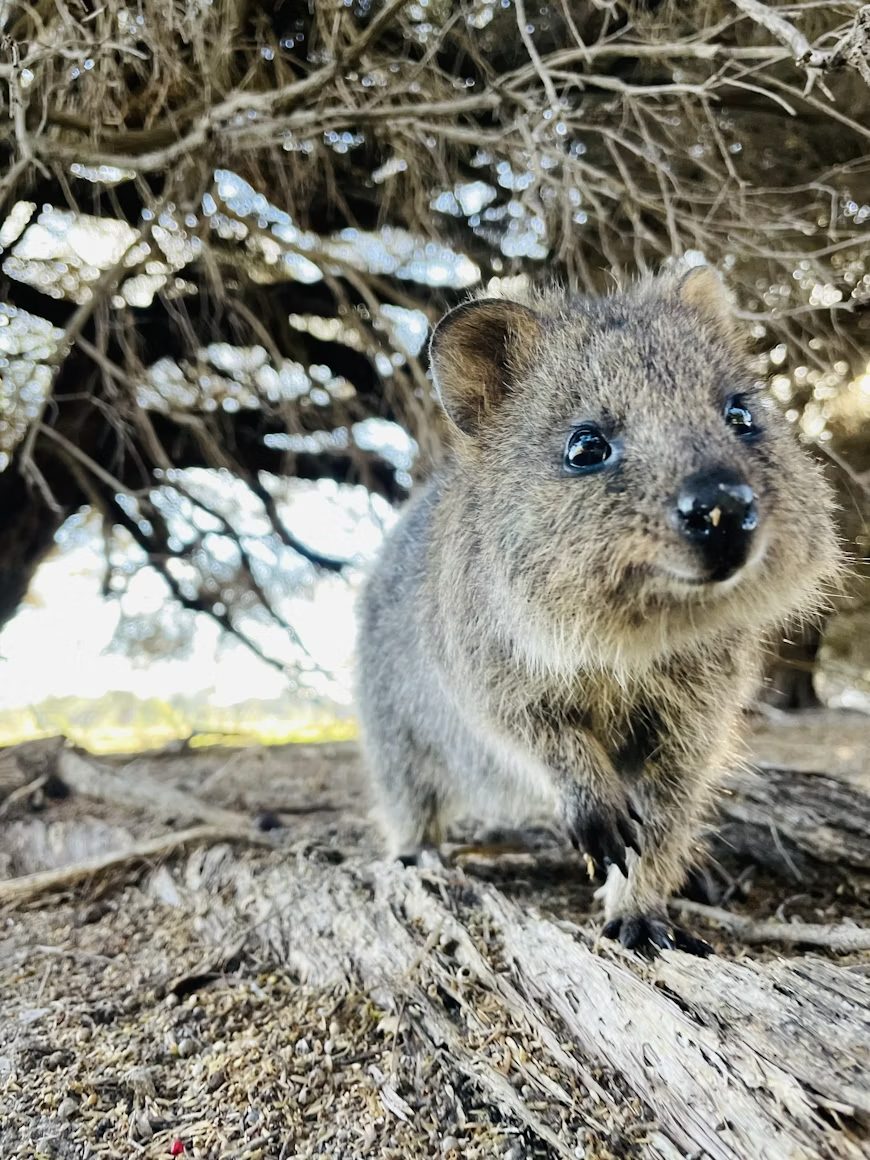
Photo by Tianlei Sun on Unsplash
It refers to the actual animal, a small wallaby-like marsupial known for its friendly, photogenic expression.
Rottnest Island (whose name literally means "rat's nest" after early Dutch explorers mistook quokkas for giant rats) remains the best place to see them.
🎓 Want to sound like a true Aussie?
Watch Down Under English on YouTube for real Australian pronunciation, slang lessons, and culture — taught by an Australian educator.
Watch on YouTube →