Where "Echidna" Comes From
"Echidna" comes from Greek mythology: Echidna was a half-woman, half-serpent creature described in Hesiod's Theogony as the "mother of monsters," who gave birth to creatures including the Hydra, the Sphinx, and Cerberus. French naturalist Baron Georges Cuvier applied the name to the spiny egg-laying mammal in 1798, reasoning that the animal — which laid eggs like a reptile but fed its young like a mammal — was a kind of biological paradox, combining traits that appeared to belong to incompatible categories.
The echidna (Tachyglossus aculeatus in Australia) is one of only five monotreme species in the world — mammals that lay eggs rather than give birth to live young. Echidnas have no teeth and use their long sticky tongue to catch ants, termites, and worms. They are also one of the few animals known to enter a state called torpor — a deep, prolonged slowing of metabolism — as a response to cold. The Greek name, chosen for the animal's apparent biological wrongness, has stuck for over two centuries.
Source: Wikipedia — "Echidna"
"We nearly stepped on an echidna on the track."
How Aussies Actually Use It
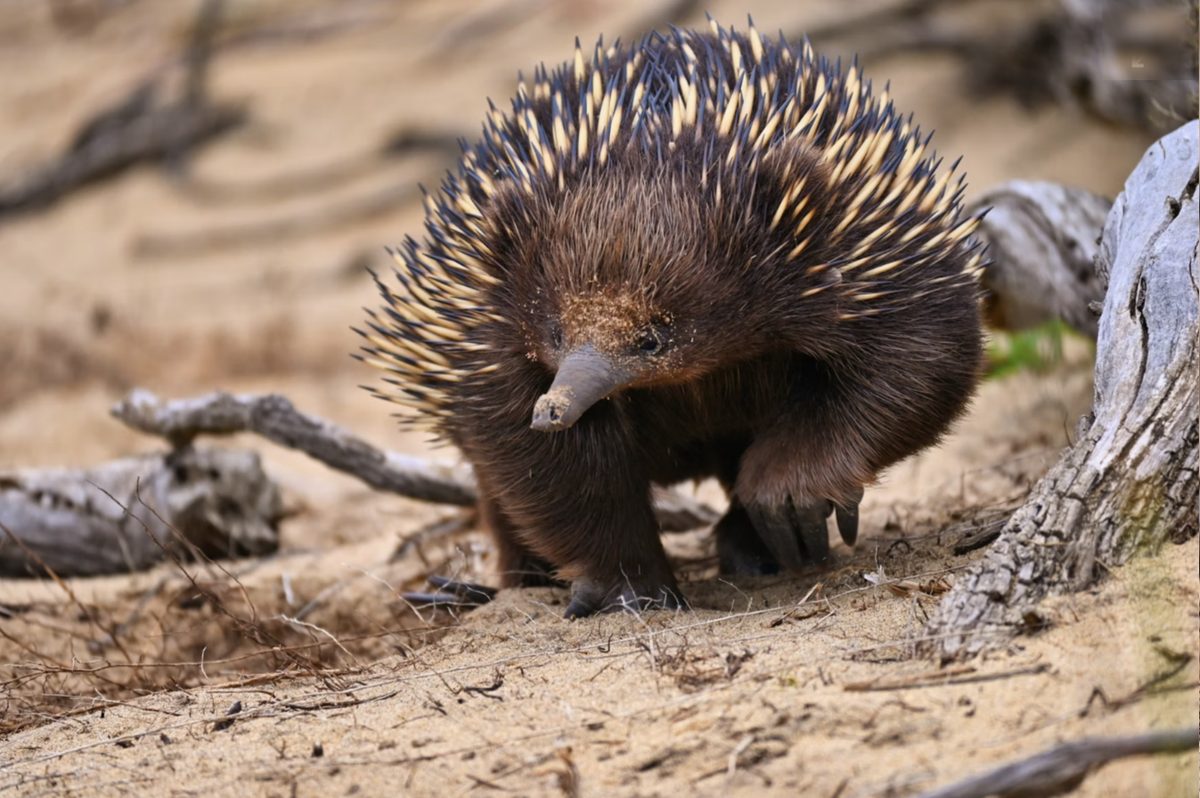
Photo by Enguerrand Photography on Unsplash
It refers specifically to the real animal, found across Australia, known for curling into a spiky ball when threatened.
It's a common sight on bushwalks and rural roads, usually shuffling along slowly.
🎓 Want to sound like a true Aussie?
Watch Down Under English on YouTube for real Australian pronunciation, slang lessons, and culture — taught by an Australian educator.
Watch on YouTube →