Where "Koala" Comes From
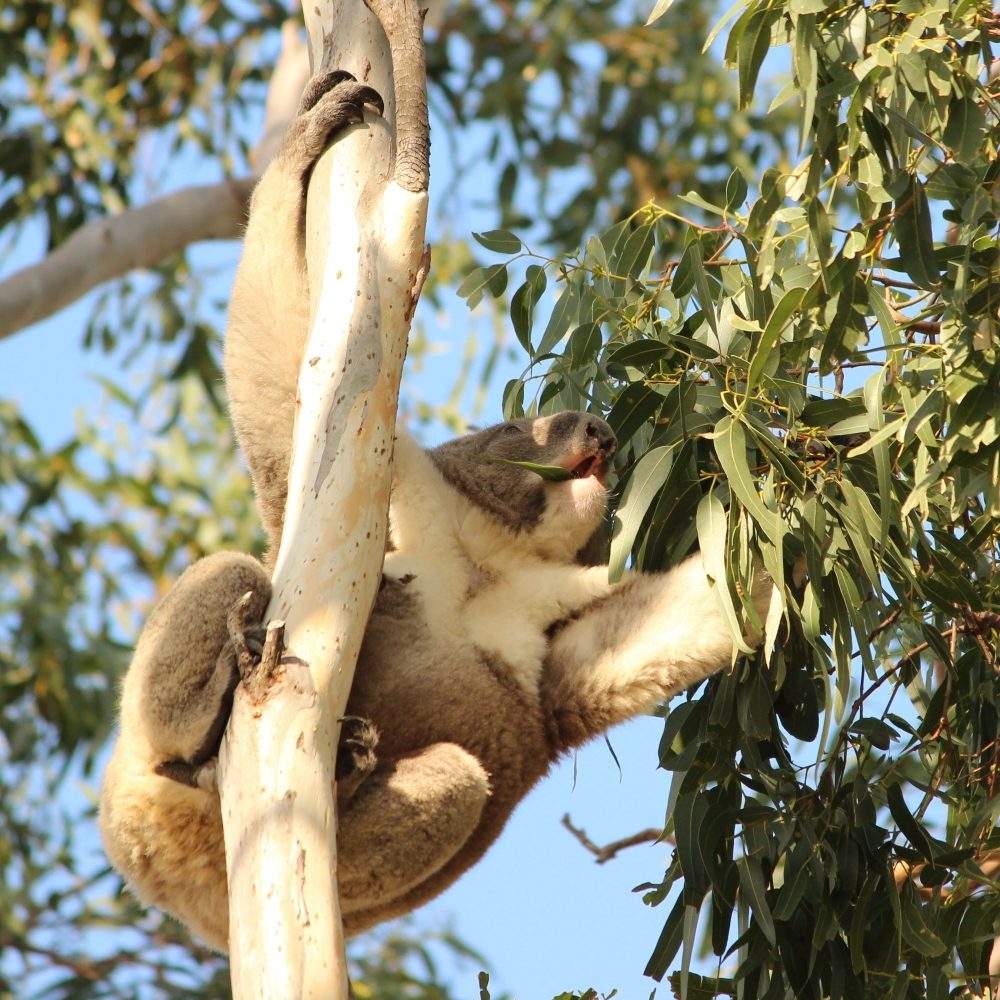
Photo by Janine Duffy / Echidna Walkabout, Wikimedia Commons (CC BY-SA 4.0)
"Koala" comes from Dharug, the Aboriginal language of the Sydney basin, from the word gula . The name appears in English records in the early 1800s (Sydney Gazette, 1803; dictionaries date the word 1800-1810), spelled variously such as koolah.
A popular explanation claims that "koala" means "no drink" or "no water" in an Aboriginal language because koalas rarely visit waterholes. While it is true that koalas absorb almost all their hydration directly from moisture in eucalyptus leaves, some sources say gula was simply the Dharug name for the animal, while others translate it as 'no water'; the meaning is not settled.
“We spotted a sleepy koala tucked in the fork of a gum tree.”
How Aussies Actually Use It
Australians use "koala" for the animal itself — one of the most universally loved symbols of Australian wildlife alongside the kangaroo.
It has also entered popular culture in humorous folklore like the mythical "drop bear" — the exaggerated, predatory tourist prank version of a koala.
📚 Sources & Further Reading
- Australian National Dictionary Centre, ANU
- List of English words of Australian Aboriginal origin — Wikipedia
- koala - Dictionary.com
- koala - Etymonline
- Koala - Wikipedia
- Koala - Australian Museum
Part of our Aboriginal Loanwords collection →
Say It Like an Aussie
Say it: koh-AH-lah.
In conversation:
- We spotted a sleepy koala in the gum tree.
- The koala was snoozing again.
- Koalas aren’t bears.
Good to know: A koala is a marsupial, not a bear, which is why many Aussies avoid “koala bear”. They’re wild animals, so admire them from a distance.
🎓 Want to sound like a true Aussie?
Watch Down Under English on YouTube for real Australian pronunciation, slang lessons, and culture.
Watch on YouTube →