Where "Numbat" Comes From
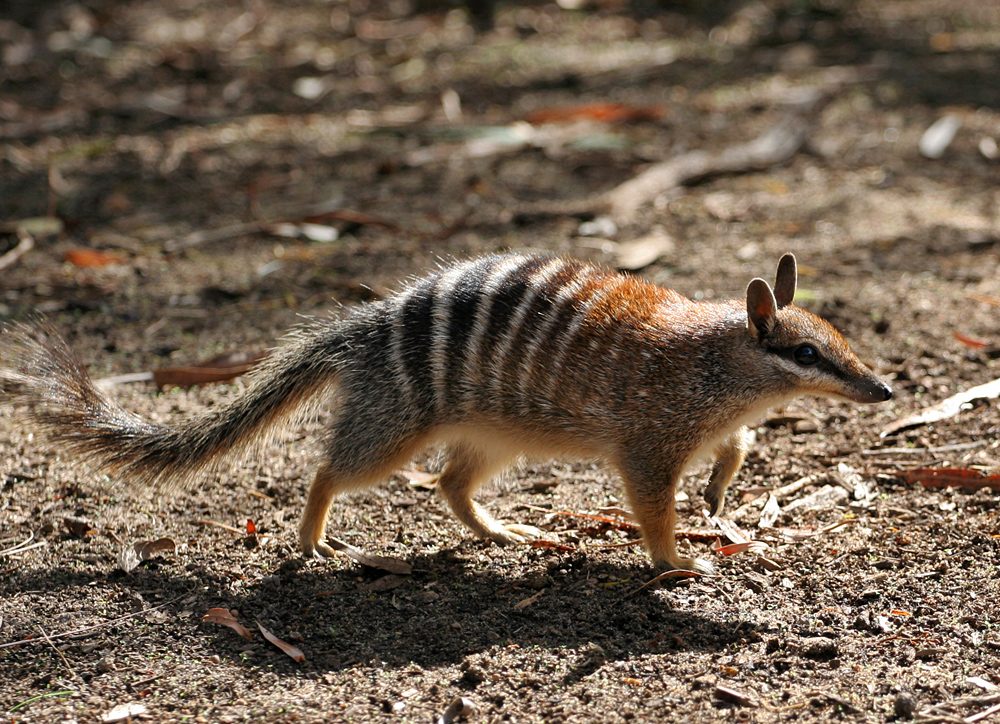
Photo by Martin Pot, Wikimedia Commons (CC BY 3.0)
"Numbat" comes from Noongar, the Aboriginal language spoken across south-western Western Australia (the word entered English in the 19th-20th centuries; Dictionary.com dates its first record to 1920-25).
Unlike almost all other Australian marsupials, the numbat is strictly diurnal (active by day) because it follows the activity patterns of the termites it eats — consuming up to 20,000 termites every single day with its remarkably long, sticky tongue.
“We were lucky enough to spot a wild numbat foraging for termites along fallen logs in Dryandra Woodland.”
How Aussies Actually Use It
The numbat (Myrmecobius fasciatus) is the official animal emblem of the state of Western Australia.
It is widely celebrated in Australian wildlife conservation as a unique creature the sole living member of its family, which split from other marsupials tens of millions of years ago.
📚 Sources & Further Reading
- Borrowings from Aboriginal Languages — Australian National Dictionary Centre, ANU
- List of English words of Australian Aboriginal origin — Wikipedia
- Numbat - Wikipedia
- numbat - Dictionary.com
Part of our Aboriginal Loanwords collection →
🎓 Want to sound like a true Aussie?
Watch Down Under English on YouTube for real Australian pronunciation, slang lessons, and culture — taught by an Australian educator.
Watch on YouTube →